


- Industry News2025-05-12
- How Does the Crystallization Quality of Perovskite Films Affect Cell Performance and How to Optimize It?


The crystalline quality of perovskite thin films has a crucial impact on the performance of perovskite photovoltaic cells, mainly reflected in the following aspects:
1. Photoelectric conversion efficiency
1. Crystal structure and light absorption
• High-quality perovskite films have excellent crystal structures and intact lattices, allowing for more effective absorption of sunlight. When perovskite crystals crystallize well, light can penetrate deep into the thin film, reducing reflection and scattering losses. For example, perovskite materials with suitable bandgaps, such as methylamine-lead-iodine (MAPbI₃), can absorb a wider spectrum of sunlight, including visible light and some near-infrared light, when crystallized well, thereby increasing the generation of photogenerated carriers.
• Moreover, good crystalline quality can make the crystal's energy band structure more ideal. This means photogenerated electrons and holes can be separated more efficiently and collected by electrodes. Conversely, thin films with poor crystalline quality may exhibit lattice distortion, causing band structure chaos, causing some photogenerated carriers to recombine before they are collected, reducing photoelectric conversion efficiency.
2. Defect state density
• The crystalline quality of perovskite films affects the density of their defect states. High-quality crystalline films typically have lower defect state density. The defect state can serve as the recombination center for charge carriers; when the defect state density is high, photogenerated carriers are easily captured and recombined, thereby reducing the number of carriers available to generate current.
• For example, during the growth process of perovskite crystals, if impurities or suboptimal growth conditions occur during crystallization, defects such as vacancies and interstitial atoms may appear in the lattice. These defects increase the chance of carrier recombination, reduce the cell's short-circuit current and open-circuit voltage, and ultimately lower the efficiency of photoelectric conversion. High-quality crystalline perovskite films can effectively reduce these defects, improve carrier mobility and lifespan, and thereby enhance battery performance.
2. Carrier mobility and lifetime
1. Regarding migration rates
• Good crystalline quality means perovskite films have more regular lattice arrangements. This provides a more ordered transport channel for carriers (electrons and holes). In high-quality crystalline thin films, carriers can move more freely within the lattice, with higher mobility.
• Taking perovskite solar cells as an example, when the perovskite layer crystallizes well, electrons and holes can quickly transfer from the generation region to the corresponding electrodes, reducing energy loss during transmission. For example, in high-efficiency perovskite cells, electron mobility can reach high values, allowing the cell to effectively collect photoactive carriers and increase the cell's filling factor, thereby improving performance.
2. Lifespan
• Perovskite films with high crystalline quality can extend carrier lifespans. In films with poor crystallinization, there are many defects and grain boundaries. These defects and grain boundaries accelerate carrier recombination and shorten carrier lifetime.
• Long-lived carriers spend more time being collected by the electrode rather than recomposing inside the film. For example, in high-quality perovskite film cells, the lifespan of photoactive carriers can reach microseconds or even milliseconds, providing favorable conditions for efficient energy conversion in the cell.
3. Stability
1. Environmental stability
• Crystalline quality affects perovskite film's resistance to environmental factors such as humidity, temperature, and light. High-quality crystalline films typically have denser structures, better able to block moisture and oxygen from entering.
• For example, when perovskite films crystallize well, their surface and internal pores are few, making it difficult for moisture and oxygen to penetrate the film and react with the perovskite material. Films with poor crystalline quality are easily affected by environmental factors, leading to the decomposition of perovskite materials. For example, MAPbI₃ can hydrolyze in humid environments to form hydrates of hydrogen iodide and lead, causing rapid performance degradation.
2. Thermal stability
• Good crystalline quality also helps improve the thermal stability of perovskite films. At higher temperatures, well-crystallized perovskite films can maintain the integrity of their crystal structure without easily undergoing lattice distortion or phase transition.
• For example, during the operation of perovskite cells, light and current flow generate a certain amount of heat. High-quality crystalline perovskite films can better withstand this thermal influence, maintaining stable battery performance, while films with poor crystalline quality may experience significant performance degradation at high temperatures.
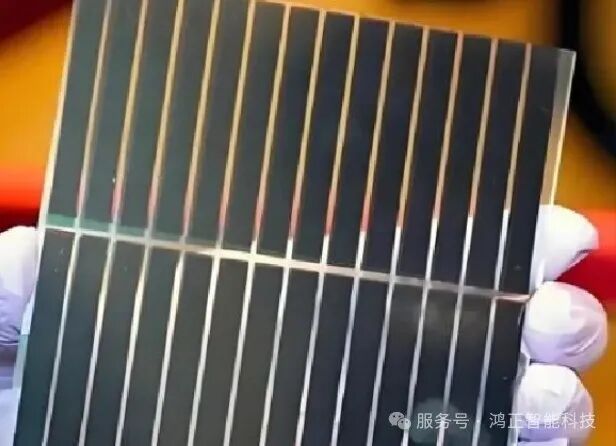
Here are some methods to improve the crystallization quality of perovskite thin films:
1. Material optimization
1. Control of precursor solution purity
• Using high-purity precursor materials is fundamental to improving crystal quality. Impurities may introduce defects during the growth of perovskite crystals, affecting the crystal structure. For example, if the precursor solution contains trace amounts of heavy metal impurities, these impurity atoms may enter the lattice, disrupting the normal lattice arrangement.
• Strict purification of precursor solutions, such as recrystallization and sublimation to remove impurities, can effectively improve the crystallization quality of perovskite films.
2. Introduction of additives
• Adding appropriate additives to precursor solutions can improve crystallization quality. For example, adding organic amine compounds such as phenylethylamine (PEA) or benzylamine (PMA) can interact with perovskite precursors. These additives can alter the viscosity and crystallization behavior of precursor solutions, binding with the perovskite nuclei during the early stages of perovskite crystal growth, guiding the orderly growth of the crystal and thus forming high-quality perovskite films.
• Adding small molecules such as monomethylamine (MA) or dimethylamine (DMA) can form intermediate complexes with precursors like lead iodide (PbI₂). These complexes facilitate nucleation and growth of perovskite crystals, reducing defects in the crystals.
3. Solvent selection and optimization
• The choice of solvent is crucial to the crystallization quality of perovskite films. Common solvents include dimethylformamide (DMF), dimethyl sulfoxide (DMSO), and others. Different solvents have varying dissolution capacities for perovskite precursors, directly affecting the concentration and viscosity of the precursor solution.
• For example, DMF is a commonly used polar solvent that can effectively dissolve perovskite precursor materials, giving the precursor solution low viscosity and facilitating uniform coating. DMSO, on the other hand, has a higher boiling point and slower evaporation rate, providing a longer crystallization time during crystallization, which is beneficial for crystal growth.
• A mixed solvent system can be used to optimize the crystallization process. For example, mixing DMF and DMSO in certain proportions and utilizing their synergistic effect can ensure good fluidity of the precursor solution while providing appropriate crystallization conditions, thereby improving the crystallization quality of perovskite films.
2. Optimization of preparation processes
1. Control of coating processes
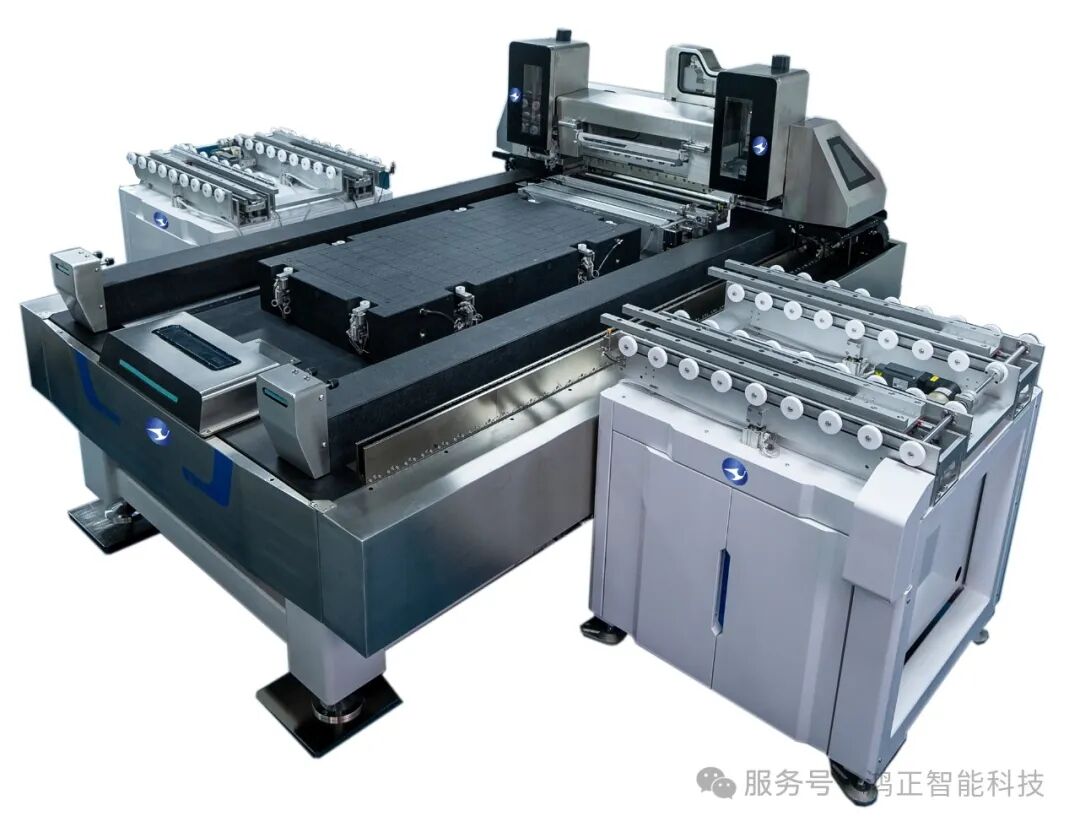
• In coating processes such as slit coating and spin coating, precise control of coating speed and coating gap parameters is critical for crystallization quality. Taking slit coating as an example, the speed of coating affects the residence time of the precursor solution on the substrate, thereby affecting solvent evaporation and crystal nucleation growth.
• If the coating speed is too fast and the precursor solution cannot be evenly spreaded, it may cause uneven film thickness and incomplete crystal growth. An appropriate coating speed allows the precursor solution to form a uniform liquid film on the substrate, providing a solid foundation for subsequent crystallization processes.
• At the same time, controlling the coating gap is also important. Too large a gap may cause uneven coating, while too small a gap may prevent the solution from flowing out normally, affecting the coating effect.
2. Annealing treatment
• Annealing is an important processing step after the preparation of perovskite films. Appropriate annealing temperature and time can promote further growth and crystallization of perovskite crystals.
• For example, for certain perovskite materials, annealing at 100-150°C can reduce the defect state density of the crystal and increase grain size. This is because during annealing, perovskite grains undergo recrystallization under the influence of heat, filling defects at grain boundaries and making the crystal structure more complete.
• However, the annealing temperature should not be too high or too long, otherwise it may cause decomposition or overgrowth of perovskite crystals, damaging the uniformity and density of the film.
3. Control of crystallization environment
• Controlling conditions such as humidity and atmosphere in the crystallization environment has a significant impact on crystal quality. Under suitable humidity, perovskite crystal growth can proceed more effectively. For example, for certain humidity-sensitive perovskite materials, crystallization in an environment with relative humidity of 40%-60% can prevent crystal hydrolysis and overgrowth caused by excessive humidity, and also prevent rapid solvent evaporation caused by low humidity, allowing crystals enough time to arrange in an orderly manner.
• Additionally, crystallization in an inert gas atmosphere (such as nitrogen or argon) can prevent oxidation and hydrolysis of perovskite crystals by oxygen and water vapor. For example, oxygen may react with certain components in perovskite materials to form new compounds and alter the electronic structure of the crystal, while an inert gas environment can effectively isolate these adverse reactions and improve crystal quality.
3. Foundation Engineering
1. Substrate surface treatment
• Treating the substrate surface can improve the crystallization quality of perovskite films. For example, plasma cleaning of substrate surfaces can remove organic pollutants and impurities while activating the substrate surface to increase its hydrophilicity.
• This facilitates the uniform spread of precursor solutions on the substrate, allowing perovskite crystals to nucleate and grow uniformly on the substrate surface. Additionally, chemical modification of the substrate, such as coating a thin layer of surfactant or adhesive layer, can regulate the interaction force between the substrate and the perovskite film, promoting the orderly growth of perovskite crystals.
2. Substrate selection and matching
• Selecting the appropriate substrate material and structure is crucial for the crystalline quality of perovskite films. Factors such as lattice matching and thermal expansion coefficient of the substrate affect the growth of perovskite crystals.
• For example, selecting substrates with lattice constants close to those of perovskite materials can reduce stress caused by lattice mismatch, facilitating epitaxial growth of perovskite crystals and improving crystal quality. At the same time, the thermal expansion coefficient of the substrate should also match the perovskite material to avoid cracking or peeling of the perovskite film caused by thermal stress during temperature changes.
Hot News
-
2026-08-21
- Carbon Nanotubes: The "Black Gold" Inside the Coating Machine Head, The "Super Material" In the Coating Process
- Simply put, carbon nanotubes can be seen as seamless, hollow tubular structures formed by rolling single or multiple layers of graphene (i.e., single-atom thickness layers of carbon atoms). Their diameters are at the nanoscale, and their lengths can reach microns or even millimeters, with an extremely high aspect ratio.
-
2026-08-13
- Air-Floating Shock Absorbing: The "Invisible Guardian" Behind Coating Precision
- On high-precision coating production lines, there is a dilemma that almost every process engineer has experienced: while the coating head, feeding system, and temperature and humidity control parameters all meet standards, the film surface repeatedly shows horizontal lines
-
2026-05-20
- Building a Global Energy Internet: Enabling Clean Energy to Cross Mountains and Seas for Global Sharing
- Currently, the global energy landscape is undergoing profound adjustments. Fossil fuels still account for more than 80% of primary energy consumption, with challenges such as tightening resource constraints, intensifying climate warming, and insufficient access to electricity in some regions.
-
2026-05-14
- Light Chasing Chronicle: A "Sunlight Relay Race" Across Half the Earth
- Have you ever wondered: the sun never works overtime, but humans need electricity 24 hours a day?