


- Industry News2025-05-27
- DeepSeek, Solid-State Batteries, Perovskite Films May Disrupt New Energy Vehicles Within a Decade


As rumors of Tesla's full autonomous driving accelerating its entry into China resurface, how Chinese car brands can better respond to another round of disruptive industry changes this manufacturer may trigger has become a hot topic. On the 25th, Tesla announced the launch of urban road assisted driving for Chinese customers, sparking speculation that its fully autonomous driving will officially be implemented in China.
Ouyang Minggao, academician of the Chinese Academy of Sciences and vice chairman of the China Electric Vehicle 100 Talents Association, commented to Jiemian News and other media at the China Electric Vehicle 100 Forum (2025) expert media exchange held on the same day, saying that as Chinese automakers widely integrate Deepseek, domestic companies have gained confidence in maintaining their dominance in the autonomous driving market after Tesla's full autonomous driving entered China.
According to incomplete statistics, about 20 automotive companies have already chosen to integrate with DeepSeek in the smart cockpit or AI operations sectors. There is much debate within the industry about whether DeepSeek can have a profound impact on intelligent driving.
Previously, Kaiyuan Securities pointed out that through architecture and algorithm innovation, DeepSeek significantly reduces memory usage and computational overhead, significantly improving computing power utilization efficiency despite limited computing power and training costs. It is expected to have a profound impact on the field of intelligent driving and accelerate domestic development.
In Ouyang Minggao's view, the integration of DeepSeek brings multiple benefits to accelerating the intelligent transformation of China's automotive industry. Before DeepSeek caused an industry shake, ChatGPT, developed by the American company OpenAI, held the leading position in AI models. However, the latter is no longer open-source, expensive, and due to data security concerns, it is inconvenient for Chinese companies to privatize deployment. "The emergence of DeepSeek has eliminated America's technological monopoly."
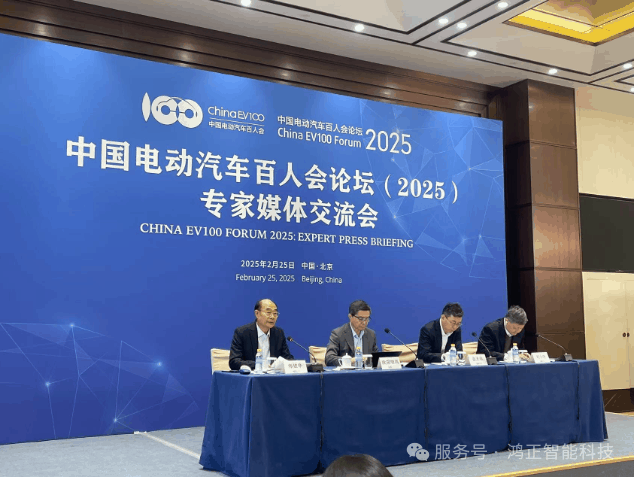
Ouyang Minggao explained that DeepSeek acquires inference capabilities through pure reinforcement learning without human intervention, significantly reducing computing power consumption during use. Its integration also benefits the promotion of domestic chips, "moving from GPUs requiring advanced processes to mature process applications." He believes that DeepSeek's improvements in end-to-end autonomous driving cost and computing power are expected to strongly promote the advent of autonomous driving.
From an industry perspective, Ouyang Minggao predicts that fully driverless driving will begin to gain momentum around 2027, and by 2030, it may reach initial scale in mid-to-high-end sedans.
In mid-last year, the first batch of domestic L3 autonomous driving road pilot lists was announced, with nine companies including FAW, SAIC, GAC, and Changan selected. This is seen as an important step for the industry toward fully autonomous driving. Ouyang Minggao believes that L3-level autonomous driving will not be fully adopted in the short term; it will remain a niche pilot in the next two years and may start with high-end models. High-end models are more expensive, can afford more sensor costs, and can support greater safety redundancy to collect more long-tail scenario data for iteration.
Zhang Yongwei, Vice Chairman and Secretary-General of the China Electric Vehicle 100 Talents Association, added that another difficulty in the current popularization of L3 is that the law has not clearly defined the responsible parties in the driving process, which will determine the timeline for full opening.
The impact of artificial intelligence on the automotive industry will go beyond intelligent driving and span the entire industry chain—design, manufacturing, sales, and maintenance. Ouyang Minggao gave an example, saying that DeepSeek's strengths also lie in promoting the formation of specialized vertical large models, assisting in the development of battery electrolytes and battery management systems.
Regarding changes in new energy power technology routes, Ouyang Minggao predicts that by 2025, the share of plug-in hybrid technology routes in the new energy vehicle market will rise from 30% to about 40%, range-extended technology routes will remain at around 10%, and pure electric technology routes will drop to around 50%.
One important reason for this prediction is that new energy vehicles have already fully penetrated the mainstream family sedan market. "Users in this segment have extreme demands for cost-effectiveness: good performance, low price, long-distance capability, and savings on short trips. Compared to pure electric models, plug-in batteries will be more preferred by companies and users."
Regarding range-extended models, Ouyang Minggao believes that in the short term, high-end SUVs will mainly continue to use them, and their market share will not change significantly for the time being.
The rapid development of intelligent configurations and battery technology has previously driven China's new energy vehicles (2.500, -0.03%, -1.19%) forward. A report released by the Association of Automobile Manufacturers shows that China's new energy vehicle sales surpassed 12 million units for the first time last year. From 1.2 million to 12 million units, Chinese automobiles have gone through five years. Ouyang Minggao estimates that it will take roughly three years to move from 12 million to 22 million.
Optimistic expectations for the future are also likely closely related to the development of energy replenishment technology. The industry generally believes that the next big trend in the new energy vehicle battery field is solid-state battery technology. Compared to traditional liquid batteries, solid-state batteries offer advantages such as higher safety and energy density, longer lifespan, and faster charging speed.
On the same day as the exchange meeting, Mercedes-Benz announced the start of all-solid-state battery road testing. Among domestic companies, Changan Automobile (13.390, 0.00, 0.00%) has announced its latest plan to wait until 2026 for solid-state battery installation validation, SAIC Motor (16.920, 0.04, 0.24%) plans to deliver all-solid-state batteries in bulk and complete prototype testing in 2026, and Lantu has announced the launch of its third-generation solid-state battery technology iteration.
The fierce competition between domestic and international companies in the all-solid-state battery field has attracted significant attention from the industry. In interviews with Jiemian News and other media, Ouyang Minggao predicted that solid-state battery installation in China will be around 2027. Even if foreign companies really install vehicles a year ahead of domestic ones, Ouyang Minggao believes there is no need to worry too much. "Installing vehicles first does not mean disrupting the industry landscape; the key is to capture the market, and you need to capture at least 1% of the market to have an advantage."
Ouyang Minggao estimates that it may take 5 to 10 years for all-solid-state batteries to account for 1% of the market in China. A positive sign is that the total number of battery patents China applied for in the second half of last year was three times that of Japan, showing China's momentum to surpass other countries.
Looking further ahead, another energy replenishment technology that could profoundly influence the industry landscape is perovskite solar (4.480, -0.04, -0.88%) cell thin-film cells. Ouyang Minggao explained that compared to rigid crystalline silicon cells, transparent perovskite films can be spread across the entire vehicle body to absorb energy, covering an area of up to 10 square meters—five times larger than crystalline silicon photovoltaics. With this technology, 6 to 8 kWh of electricity can be supplied daily, which is enough to meet the basic daily commuting needs.
Currently, coal holds a dominant position in China's energy consumption structure. Ouyang Minggao predicts that after mass production of full-body perovskite thin-film power batteries and widespread vehicle-grid interaction, green electricity will become the mainstay by 2035. By then, total domestic and international sales are expected to approach 30 million units, with an estimated 200 million to 300 million units, marking the true low-carbon transformation of new energy vehicles.
He especially emphasized that with the mass production of all-solid-state batteries, the application of perovskite films, the popularization of charging infrastructure, and smart energy systems for vehicle-grid interaction, pure electric passenger vehicles will regain their dominant market position, accounting for more than 70% of new car sales.
Once these technologies become widespread, scenarios of "driving to earn money" may even emerge in the future. Car owners can collect electricity and discharge it to the grid during peak hours to earn the price difference.
As new energy vehicles in China continue to develop rapidly, battery recycling issues are receiving increasing attention. The State Council executive meeting was recently held and reviewed and approved the "Action Plan for Improving the Recycling System of New Energy Vehicle Power Batteries." The meeting pointed out that China has now entered the phase of large-scale retirement of new energy vehicle power batteries, making it especially important to comprehensively enhance the capacity for power battery recycling and utilization.
Ouyang Minggao stated that this meeting emphasized strengthening comprehensive supervision of the recycling process through legal measures. "Currently, battery material prices are low. If we focus purely on economics, it's hard for practitioners to achieve high returns. Therefore, battery recycling cannot rely solely on market behavior and requires policy and regulatory support. Another aspect is technological progress, from dry and wet processes to direct recycling, making benefits more obvious. Carbon emissions depend on multifaceted coordination across society. ”
Article reprinted from: Sina Finance
Hot News
-
2026-08-21
- Carbon Nanotubes: The "Black Gold" Inside the Coating Machine Head, The "Super Material" In the Coating Process
- Simply put, carbon nanotubes can be seen as seamless, hollow tubular structures formed by rolling single or multiple layers of graphene (i.e., single-atom thickness layers of carbon atoms). Their diameters are at the nanoscale, and their lengths can reach microns or even millimeters, with an extremely high aspect ratio.
-
2026-08-13
- Air-Floating Shock Absorbing: The "Invisible Guardian" Behind Coating Precision
- On high-precision coating production lines, there is a dilemma that almost every process engineer has experienced: while the coating head, feeding system, and temperature and humidity control parameters all meet standards, the film surface repeatedly shows horizontal lines
-
2026-05-20
- Building a Global Energy Internet: Enabling Clean Energy to Cross Mountains and Seas for Global Sharing
- Currently, the global energy landscape is undergoing profound adjustments. Fossil fuels still account for more than 80% of primary energy consumption, with challenges such as tightening resource constraints, intensifying climate warming, and insufficient access to electricity in some regions.
-
2026-05-14
- Light Chasing Chronicle: A "Sunlight Relay Race" Across Half the Earth
- Have you ever wondered: the sun never works overtime, but humans need electricity 24 hours a day?