


- Industry News2025-02-27
- C60 can also be prepared by wet method! >25% Inverted Perovskite Solar Cells Based on Solution-Processed C60 Electron Transport Layer


Preface
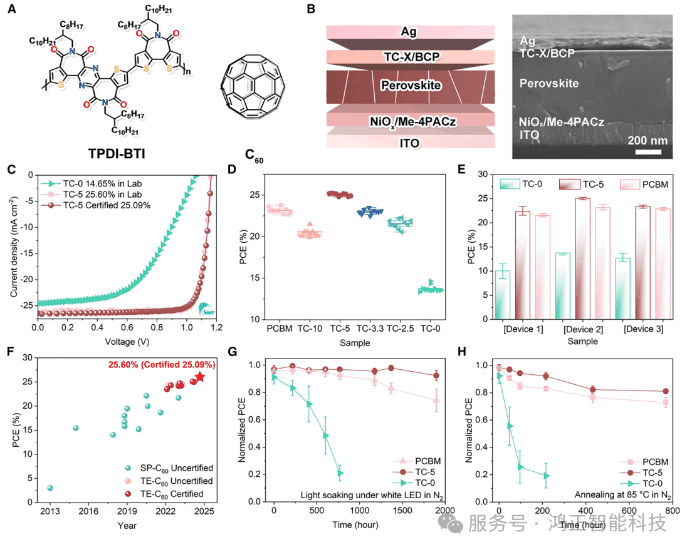
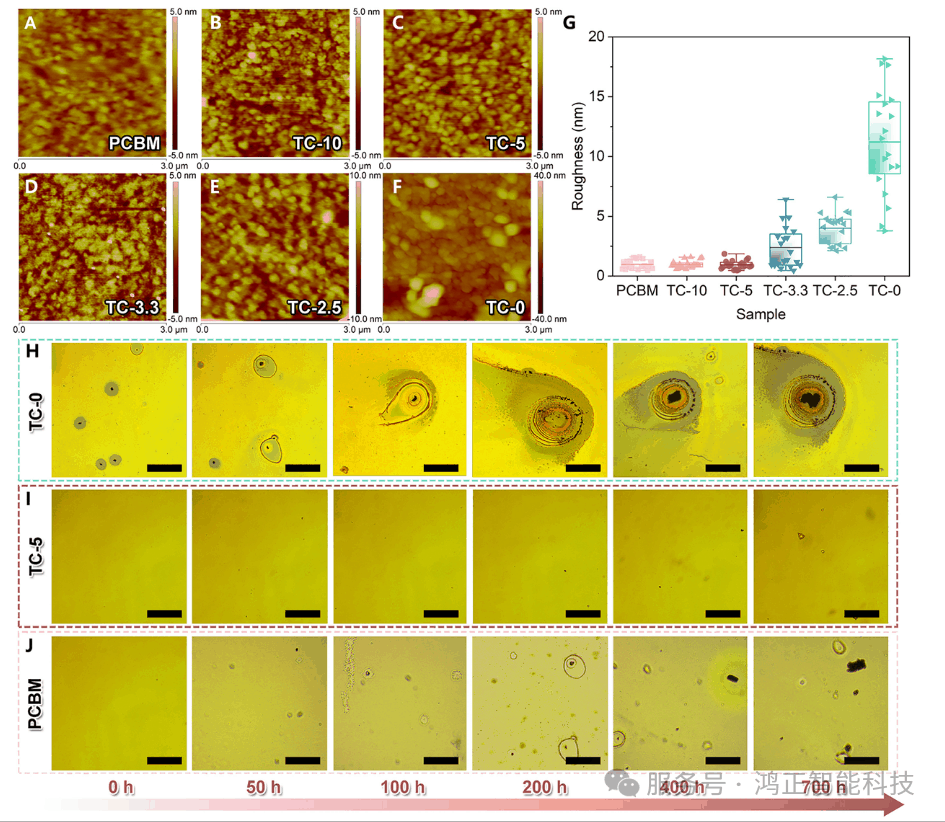
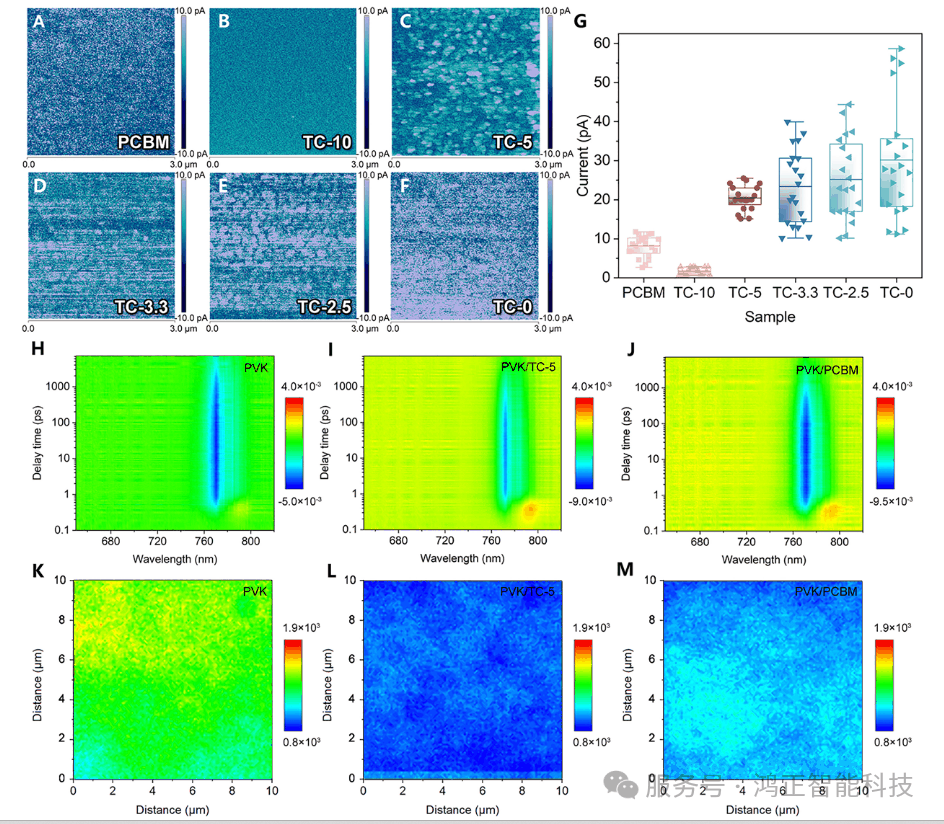
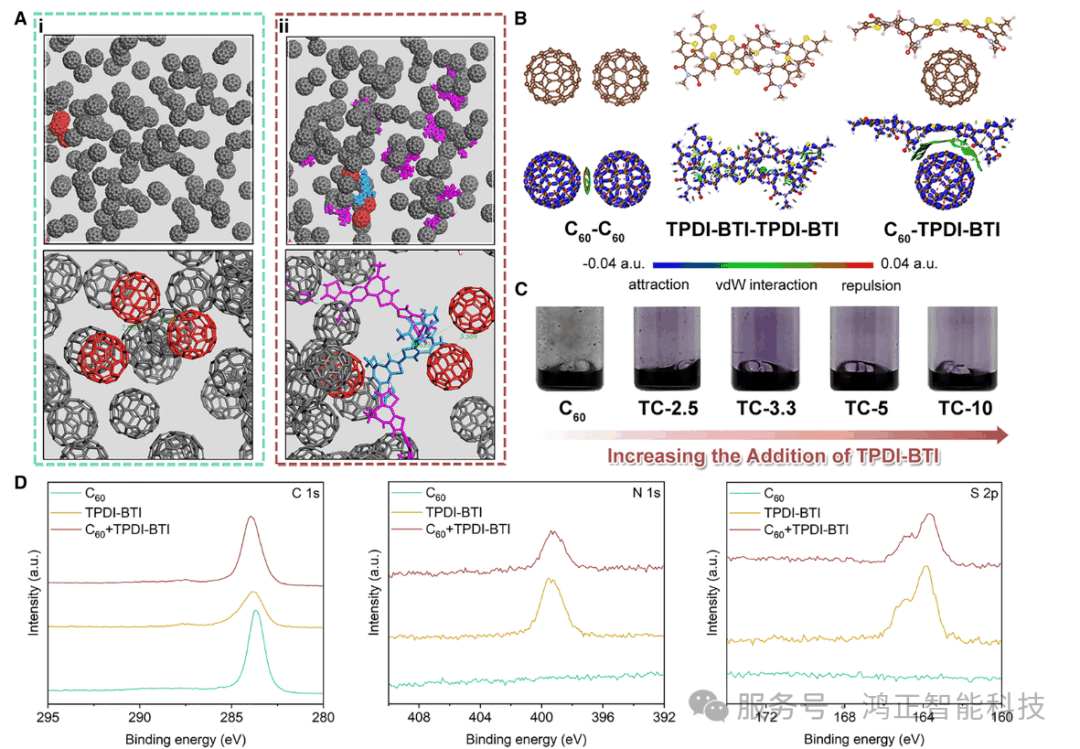
On February 5, École Polytechnique Fédérale Fédérale de Lausanne (EPFL) in Switzerland, Southern University of Science and Technology, Tianjin University, and Fujian Normal University jointly published Joule's "Solubilizing and stabilizing C60 with n-type polymer enables efficient inverted perovskite solar cells," aiming to solve the problem of C60 particle aggregation in solution and achieve solution preparation of the C60 electron transport layer. The authors stabilized C60 dispersion using n-type polymers. The inverted perovskite solar cell device with solution-processed C60 electron transport layers has an efficiency of >25%, outperforming PCBM devices and exhibiting excellent stability.
Main Text

Background: Fullerene C60 is currently the best-performing electron transport layer (ETL) in perovskite solar cells (PSCs), but it tends to accumulate in solution. Therefore, high-cost and complex thermal evaporation methods are commonly used to deposit high-quality C60 ETL.
Strategy: To address this challenge, the authors introduced an n-type polymer additive that allows C60 molecules to dissolve and stabilize, enabling efficient and stable solution treatment of C60 (SP-C60) ETL. This achievement is attributed to precisely controlled intermolecular interactions and matching properties between n-type polymers and C60.
Devices:
Efficiency: SP-C60 ETL with 5 wt% polymer achieves a champion power conversion efficiency of 25.60% (certified value 25.09%). This is not only the highest-performing solution processed C60 device currently but also a significant breakthrough that strongly complies with the most advanced thermal evaporation C60 devices.
Stability: The champion device shows significantly improved stability (T95, 1800 hours of light >; T80, 700 hours of thermal >).
Device fabrication:
Substrate preparation: ITO glass is cleaned using an ultrasonic cleaner, with cleaning solutions including detergent, deionized water, and isopropanol (IPA). After cleaning, it is dried with nitrogen, and then the ITO glass is stored in a drying cabinet. Before use, ITO glass is treated with ultraviolet-ozone for 10 minutes.
HTL: NiOx nanoparticles are dispersed in a mixed solvent (water:IPA = 3:1) at a concentration of 10 mg/mL. To prepare the NiOx layer, the solution was spin-coated at 3000 rpm for 30 seconds and annealed at 100°C for 10 minutes. Then, prepare 0.1 mg/mL Me-4PACz IPA solution, spin-coat at 4000 rpm for 30 seconds, and anneal at 100°C for 10 minutes.
Surface passivation: Using a 2 mg/mL PEAI:MAI = 2:1 mixed solution (IPA:DMF = 200:1), spin-coat at 4000 rpm for 30 seconds, then annealed at 105°C for 10 minutes to further passivate the perovskite surface.
Solution processed C60: Prepare 2 mg/mL TPDI-BTI solution, with DCB as the solvent. Then, dissolve the C60 powder in TPDI-BTI solution. By adding TPDI-BTI solutions of different concentrations or a blank DCB solvent, the weight ratio of TPDI-BTI to C60 is adjusted. The total concentration of TC-X solution is set at 25 mg/mL. For example, TC-5 solution is prepared by dissolving 20 mg of C60 powder in 500 μL TPDI-BTI DCB solution and 340 μL DCB solvent. Stir the mixed solution at 40°C for 2 hours to form a fully dissolved purple solution, suitable for TC-5 and TC-10 samples (TC-0, TC-2.5, and TC-3.3 samples are not fully dissolved). Then, the unfiltered solution was spin-coated onto the perovskite at 3000 rpm for 20 seconds, followed by annealing at 100°C for 10 minutes.
In contrast, PCBM ETL is prepared by spin-coating 20 mg/mL of PCBM CB solution at 3000 rpm for 20 seconds on perovskite. Next, 0.5 mg/mL BCP IPA solution is spin-coated at 6000 rpm for 30 seconds and annealed at 80°C for 10 minutes. Finally, the PSC is prepared by thermal evaporation by evaporating an 80 nm silver electrode at 2 × 10⁻⁴ Pa.
Original: DOI: 10.1016/j.joule.2024.101817
Hot News
-
2026-08-21
- Carbon Nanotubes: The "Black Gold" Inside the Coating Machine Head, The "Super Material" In the Coating Process
- Simply put, carbon nanotubes can be seen as seamless, hollow tubular structures formed by rolling single or multiple layers of graphene (i.e., single-atom thickness layers of carbon atoms). Their diameters are at the nanoscale, and their lengths can reach microns or even millimeters, with an extremely high aspect ratio.
-
2026-08-13
- Air-Floating Shock Absorbing: The "Invisible Guardian" Behind Coating Precision
- On high-precision coating production lines, there is a dilemma that almost every process engineer has experienced: while the coating head, feeding system, and temperature and humidity control parameters all meet standards, the film surface repeatedly shows horizontal lines
-
2026-05-20
- Building a Global Energy Internet: Enabling Clean Energy to Cross Mountains and Seas for Global Sharing
- Currently, the global energy landscape is undergoing profound adjustments. Fossil fuels still account for more than 80% of primary energy consumption, with challenges such as tightening resource constraints, intensifying climate warming, and insufficient access to electricity in some regions.
-
2026-05-14
- Light Chasing Chronicle: A "Sunlight Relay Race" Across Half the Earth
- Have you ever wondered: the sun never works overtime, but humans need electricity 24 hours a day?