


- Industry News2025-03-11
- 2025 Perovskite and Coating Equipment Market Status Analysis: Technological Breakthroughs and Industrial Opportunities in Parallel


With the continuous advancement of perovskite solar cell technology, perovskite coating equipment will also usher in new development opportunities.
Market Status: The high-growth track is beginning to take shape
Since the introduction of perovskite solar cells in 2009, their energy conversion efficiency has rapidly improved from the initial 3.8% to over 25% currently, with potential for further improvement. This material not only boasts excellent photoelectric conversion performance but also offers advantages such as low cost and ease of preparation, making it a rising star in the photovoltaic industry.
By 2025, the perovskite photovoltaic industry will enter a period of accelerated development. With technological maturity and policy support, perovskite cells, leveraging advantages such as high efficiency, low cost, and lightweight design, are gradually moving from laboratories to large-scale production. It is predicted that by 2025, the global perovskite module market will reach 3.75 billion yuan, and is expected to exceed 95 billion yuan by 2030, with a compound annual growth rate (CAGR) as high as 128%.
Coating equipment, as a key link in perovskite cell production, accounts for 30% of the total equipment investment cost. Currently, the market size of China's perovskite coating machines is about 1 billion yuan/GW, but with process optimization and mass production cost reduction, equipment investment costs are expected to drop to 500 million yuan/GW by 2030, with market space continuing to expand.
Perovskite coating equipment: the new engine of the photovoltaic industry
In the preparation of perovskite solar cells, the coating process is one of the key steps. The quality of the coating process directly affects the cell's uniformity, stability, and final photoelectric conversion efficiency. Therefore, efficient and precise coating equipment is crucial for the production of perovskite solar cells. The main points include the following:
Uniformity: The coating process must ensure the uniform distribution of perovskite material on the substrate. The uniformity of the film directly affects the photoelectric conversion efficiency and stability of the cell. Uneven films cause uneven distribution of the electric field inside the battery, affecting the transport of electrons and holes, thereby reducing the battery's conversion efficiency.
Precise control: The coating process requires precise control of the film's thickness. The thickness of the film has a significant impact on battery performance. Films that are too thick or too thin can both lead to degraded battery performance. Therefore, the coating process requires precise control of the coating thickness to achieve optimal photoelectric conversion efficiency.
Stable discharge rate stability of the liquid supply system: The stable output and output accuracy of the liquid supply pump also affect coating uniformity. Therefore, the motor selection for the supply pump is very important. The motor drive type must at least be a servo motor. Currently, Siemens servo motors in the coating industry can meet the perovskite process precision requirements and can also be selected as superior types compared to servo motors;
Material stability: Perovskite materials are sensitive to environmental conditions and are easily affected by humidity and oxygen. The coating process must be carried out in a strictly controlled environment to prevent material decomposition or deterioration during application.
Cost-effectiveness: The low cost of perovskite solar cells is one of their main advantages. Optimizing the coating process can reduce material consumption and production costs, improve production efficiency, and further lower the overall cost of perovskite solar cells.
Challenges and opportunities coexist
As a new engine in the photovoltaic industry, the development of perovskite coating equipment not only affects the production efficiency and quality of perovskite solar cells but also impacts the future of the entire photovoltaic industry. In the future, perovskite coating equipment will become more intelligent and automated to meet the needs of large-scale production. At the same time, the performance of the equipment will be further enhanced to meet the production requirements of higher-efficiency perovskite solar cells.
In terms of material compatibility, perovskite materials need to be compatible with substrates and other layer materials to ensure the overall performance of the battery. The coating process needs to adapt to different material systems to ensure material stability and activity; In terms of environmental control, strict control of environmental conditions such as temperature, humidity, and oxygen content during coating is necessary to prevent decomposition of perovskite materials; In terms of equipment precision requirements, coating equipment needs high-precision coating heads and control systems to achieve uniform coating and thickness control of the film.
2025 will be a key turning point for perovskite industrialization. With technological breakthroughs and capacity release by domestic equipment manufacturers, China is expected to dominate the global perovskite equipment market. Companies like Honest Intelligent not only provide equipment but also jointly develop customized solutions with customers, accelerating the leap from laboratory to GW-level mass production of perovskite cells, driven by a dual drive of "technology + service."
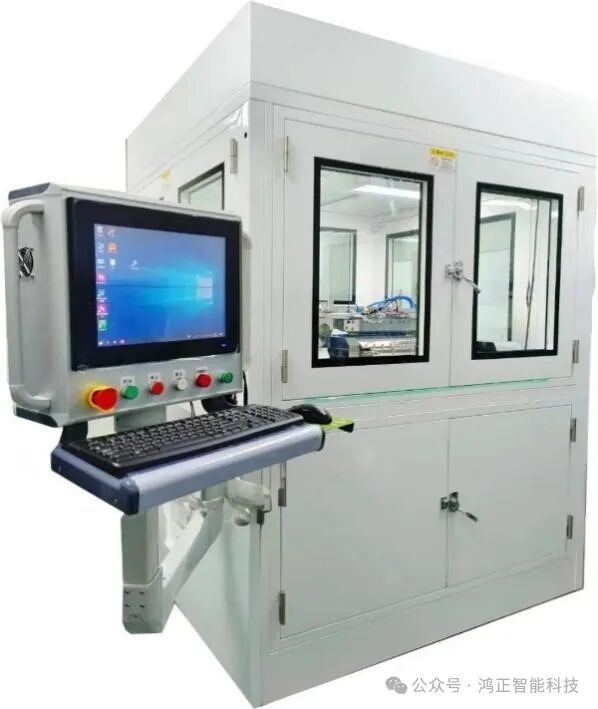
Honest Intelligent always adheres to the principle of "customer first," focusing on product quality and details. The company not only provides standardized coating equipment but also customizes non-standard coating equipment according to customers' special needs, optimizing coating processes to ensure every customer receives the most suitable solution.
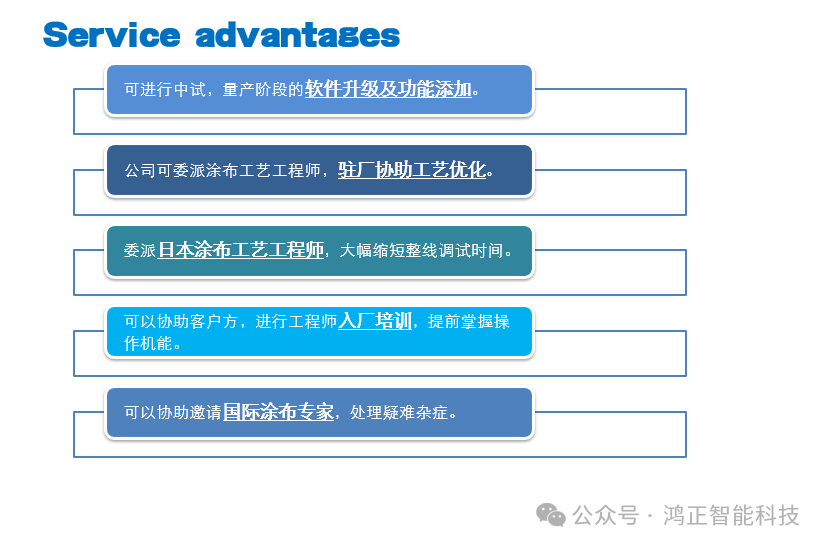
The company's technical backbone is composed of highly educated international technicians (PhDs and master's degrees in coating technology, as well as key bachelor's degrees in design). Therefore, in terms of technology, Honest possesses strong R&D capabilities and excellent equipment debugging capabilities.
At the same time, the company has several experienced Japanese experts who help the team solve technical and process challenges. This ensures that when teams encounter technical difficulties, they can quickly tackle them.
Hot News
-
2026-08-21
- Carbon Nanotubes: The "Black Gold" Inside the Coating Machine Head, The "Super Material" In the Coating Process
- Simply put, carbon nanotubes can be seen as seamless, hollow tubular structures formed by rolling single or multiple layers of graphene (i.e., single-atom thickness layers of carbon atoms). Their diameters are at the nanoscale, and their lengths can reach microns or even millimeters, with an extremely high aspect ratio.
-
2026-08-13
- Air-Floating Shock Absorbing: The "Invisible Guardian" Behind Coating Precision
- On high-precision coating production lines, there is a dilemma that almost every process engineer has experienced: while the coating head, feeding system, and temperature and humidity control parameters all meet standards, the film surface repeatedly shows horizontal lines
-
2026-05-20
- Building a Global Energy Internet: Enabling Clean Energy to Cross Mountains and Seas for Global Sharing
- Currently, the global energy landscape is undergoing profound adjustments. Fossil fuels still account for more than 80% of primary energy consumption, with challenges such as tightening resource constraints, intensifying climate warming, and insufficient access to electricity in some regions.
-
2026-05-14
- Light Chasing Chronicle: A "Sunlight Relay Race" Across Half the Earth
- Have you ever wondered: the sun never works overtime, but humans need electricity 24 hours a day?